
Fibre is one of the most important parts of a healthy diet, and one of the most commonly missed. Most adults in the U.S. and UK eat well below the recommended amount. The good news is that a few simple swaps can make a big difference. This guide explains why fibre matters, how much you need and the easiest foods to get it from.
What is fibre and why does it matter?
Dietary fibre is the part of plant foods that your body cannot fully digest. Instead of being absorbed, it passes through your digestive system, where it does several useful jobs. According to Mayo Clinic, a high-fibre diet:
- Supports regular bowel movements and helps prevent constipation.
- Helps lower cholesterol, particularly the soluble fibre found in oats, beans and lentils.
- Helps control blood sugar by slowing the absorption of sugar.
- Helps you feel full, which can support a healthy weight.
- Is linked with a lower risk of heart disease, type 2 diabetes and bowel cancer.
Fibre also feeds the friendly bacteria in your gut, which play a role in digestion and overall health.
Soluble vs. insoluble fibre
- Soluble fibre dissolves in water to form a gel. It is found in oats, barley, beans, lentils, apples, citrus fruit and carrots, and is especially helpful for cholesterol and blood sugar.
- Insoluble fibre adds bulk and helps food move through the gut. It is found in wholewheat flour, bran, nuts, and the skins of many vegetables and fruit.
Most plant foods contain a mix of both, so eating a variety is the best approach.
How much fibre do you need?
- UK: the NHS recommends 30 g a day for adults.
- U.S.: roughly 25 g a day for women and 38 g a day for men under 50, and slightly less for adults over 50.
Many people eat only around 15 to 20 g a day, so most of us have room to improve.
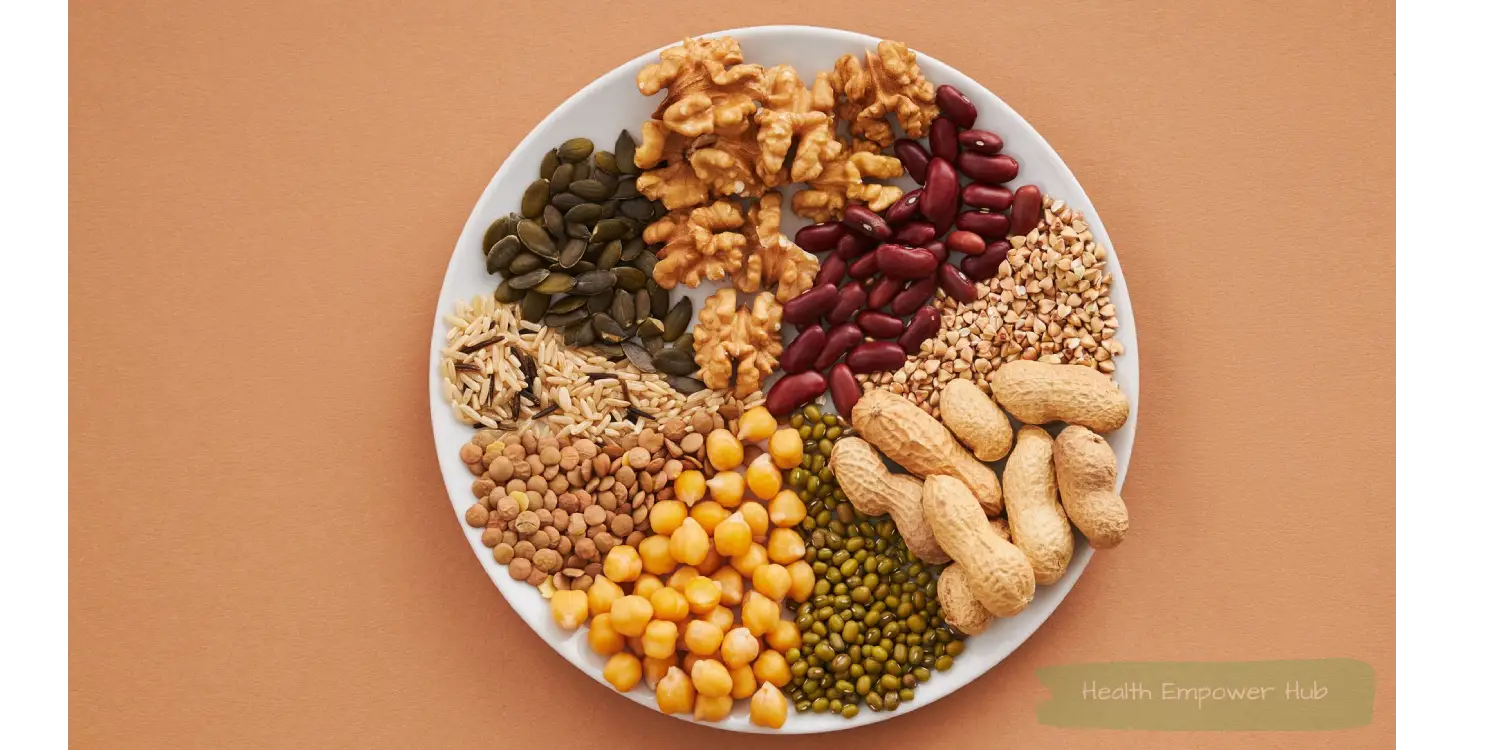
The best high-fibre foods
Approximate fibre content per typical serving:
- Lentils, cooked (1 cup): about 15 g
- Black beans, cooked (1 cup): about 15 g
- Chickpeas, cooked (1 cup): about 12 g
- Raspberries (1 cup): about 8 g
- Pear, medium, with skin: about 5 to 6 g
- Oats, cooked (1 cup): about 4 g
- Apple, medium, with skin: about 4 to 5 g
- Chia seeds (1 tablespoon): about 4 g
- Broccoli, cooked (1 cup): about 5 g
- Wholewheat bread (2 slices): about 4 to 6 g
- Almonds (30 g handful): about 3.5 g

Simple swaps to eat more fibre
- Choose wholegrain versions of bread, pasta and rice instead of white.
- Start the day with oats or a wholegrain cereal, topped with fruit and seeds.
- Add beans or lentils to soups, stews, salads and pasta sauces.
- Keep the skin on potatoes, apples and pears where you can.
- Snack on fruit, nuts or vegetables with hummus instead of crisps or biscuits.
- Aim for half a plate of vegetables at lunch and dinner.
Increase fibre gradually
If you currently eat little fibre, adding a lot at once can cause bloating, gas and cramps. Increase it slowly over a few weeks to let your gut adjust, and drink plenty of water, because fibre works best when it can absorb fluid.
People with certain digestive conditions, such as inflammatory bowel disease or irritable bowel syndrome, may need a tailored approach. In these cases, it is best to get advice from a doctor or dietitian.
What about fibre supplements?
Supplements such as psyllium can be useful for some people, for example to manage constipation. But they do not replace whole foods, which also provide vitamins, minerals and other beneficial plant compounds.
The bottom line
Most adults need 25 to 30 g of fibre or more a day, and most of us fall short. Fill up on beans, lentils, whole grains, fruit, vegetables, nuts and seeds, make changes gradually, and drink enough water. Your digestion, heart and blood sugar will all benefit.
This article is for general information only. If you have a digestive condition, speak to your doctor or a registered dietitian before making major changes to your diet.